

 CAREERS
 PAY YOUR BILL
 PATIENT PORTAL
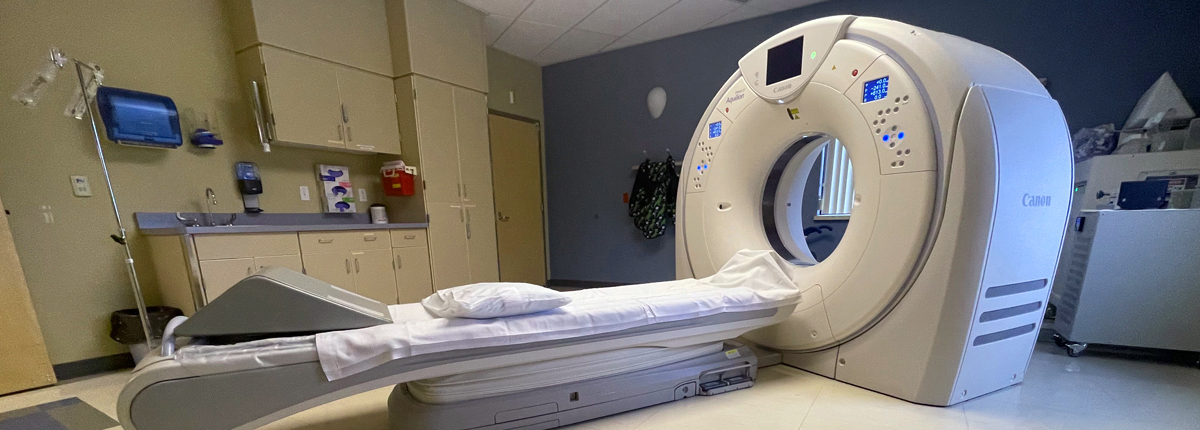
MRI, CT Scans and Imaging near you in Klickitat County
Contact Us
KVH Diagnostic Imaging is located at 310 S. Roosevelt in Goldendale, WA. Enter at the main hospital entrance to check in with registration.
Open Monday-Friday 7:30 am to 5:30 pm for walk ins.
Open Saturday and Sunday 7am to 5pm for walk ins.
Call (509) 773-1020 or email [email protected]
Fax (509) 773-6497 for reports or orders
For Providers
Access Novarad (PACS)
Upload imaging studies to PowerShare here.
Award Winning, State-of-the-Art Imaging Services
The KVH Diagnostic Imaging Team has been awarded the ACR Golden Seal of Accreditation by the American College of Radiology. This accreditation is given to medical facilities that offer superior CT image quality along with close attention to patient safety. The award also recognizes the high level of professional training that our CT technologists have completed. When your doctor needs to see inside your body to detect, diagnose or treat a medical condition, you can trust Klickitat Valley Health for safe, accurate, timely imaging and radiology services.
Find a wide range of diagnostic imaging services at KVH, including:
Computed Tomography (CT/CAT Scan) uses special x-ray equipment to obtain image data from different angles around the body. It then uses computer processing of the information to show a cross-section of body tissues and organs. CT scans are the first line of defense for people experiencing the symptoms of a stroke to quickly determine if the patient can safely receive medication. Commonly used for diagnosing internal injuries, cancer, tumors, or kidney stones, CT is also a trauma modality.
Magnetic Resonance Imaging (MRI) uses radio waves and a strong magnetic field rather than x-rays to provide remarkably clear and detailed pictures of internal organs and tissues. The technique has proven very valuable for the diagnosis of a broad range of conditions in all parts of the body, including cancer, heart and vascular disease, stroke, and joint and musculoskeletal disorders.
Mammography is a specific type of imaging using a low-dose x-ray system for examination of the breasts. Klickitat Valley Hospital offers the most advanced technology with digital mammography. Digital mammography is 25 percent more effective at detecting abnormalities in women with dense breasts than conventional mammography. While other diagnostic tests are sometimes necessary, the mammogram is the first line of defense against breast cancer.
Ultrasound Imaging, also called ultrasound scanning or sonography, is a method of “seeing” inside the human body through the use of high-frequency sound waves. The sound waves are recorded and displayed as a real-time visual image. No radiation is involved in ultrasound imaging. Ultrasound is a useful way of examining many of the body’s internal organs, including the heart, liver, gallbladder, spleen, pancreas, kidneys, and bladder. Ultrasound, as most people know, is the preferred method used to visualize an unborn fetus.
X-Ray Imaging or radiography, is the oldest and most frequently used form of medical imaging. For nearly a century, diagnostic images have been created by passing small, highly controlled amounts of radiation through the human body, capturing the resulting shadows and reflections on a “digital” plate. X-rays allow the physician to view and assess broken bones, a cracked skull or injured backbone. X-rays also play a key role in orthopedic surgery and the treatment of sports injuries. Procedures are also performed at the patient’s bedside using mobile radiographic equipment as well as in the Emergency Department, and recovery room. KVH Diagnostic Imaging also supports the Surgical Care department by offering digital imaging during procedures to assist our surgeons.
Bone Density Testing
Bone density testing is done to determine if you have osteoporosis. Osteoporosis is when bones are more fragile and more likely to break.
Years ago, osteoporosis would only be suspected once you broke a bone. Currently, a bone density test gives a more accurate calculation of your risk of breaking bones. After your exam, you and your provider can determine if you are at risk and if you should take action to improve or stabilize your bone density.
- Doctors use bone density testing to:
- See if bone density is decreased before you break a bone
- Determine your risk for breaking bones (fractures)
- Identify osteoporosis
- Monitor treatment of osteoporosis
Medicare allows a bone density test to be completed once every 23 months.
Osteoporosis is more common in older women, however, men also develop the condition, and regardless of your age or sex, your doctor may ask you to have a test if you’ve:
- Lost height
- Broken a bone
- Taking certain medicine such as long-term steroid use
- Had a transplant
- Had a drop in hormone levels such as estrogen
When scheduling your exam we’ll ask you to stop taking any calcium supplements or milk of magnesia for 48 hours before your bone density exam. The exam requires about 20 minutes to complete.
Calcium Cardiac Score Testing (Coronary Calcium Scan)
A calcium cardiac score test, also known as a coronary calcium scan, is a low dose noninvasive CT scan that measures the amount of calcium in your heart’s arteries and guide treatment decisions for your provider including medication adjustments and care plan.
How it Works
You lie on a table that slides in and out of the scanner while a Technologist takes images of your heart with the CT machine. You will be hooked up to a heart monitor to assist in acquiring the best possible image. In total the exam takes 10-15 minutes.
What it Shows
The scan shows calcium deposits in your arteries, which can narrow them and reduce blood flow to your heart. Your doctor can use your score to help decide on treatment, medications, and lifestyle changes to reduce your risk.
What it means
A higher score indicates a higher risk of heart attack, heart disease, or stroke. However, a high score doesn’t guarantee that you’ll have a heart attack, and a low score doesn’t guarantee that you’re not at risk.
People That Qualify For a CT Calcium Score
- A person over the age of 40
- No possibility of pregnancy
- Has a family history of heart disease
- Have elevated cholesterol levels
People With a Higher Risk for Coronary Calcium
- A history of smoking
- High blood pressure
- A sedentary lifestyle
People Who Are NOT Candidates
- Have had a Coronary Artery Bypass
- Have had previous cardiac (heart) stents
- Have pacemaker
- Have had a previous angiogram to evaluate your coronary arteries
- Have had previous heart attack
- Are on dialysis
- Under the age of 40 years old
- Have had a CT calcium score within the last 5 years
How to Prepare for an Imaging Appointment
- Do not drink caffeine 6 hours prior to your appointment time to achieve the lowest heart rate possible.
- Eat and drink normally otherwise
- Your skin will be cleaned using an abrasive substance in the four areas where the heart monitor stickers will be located
- Do not apply excessive skin lotion prior to your appointment.