

 CAREERS
 PAY YOUR BILL
 PATIENT PORTAL
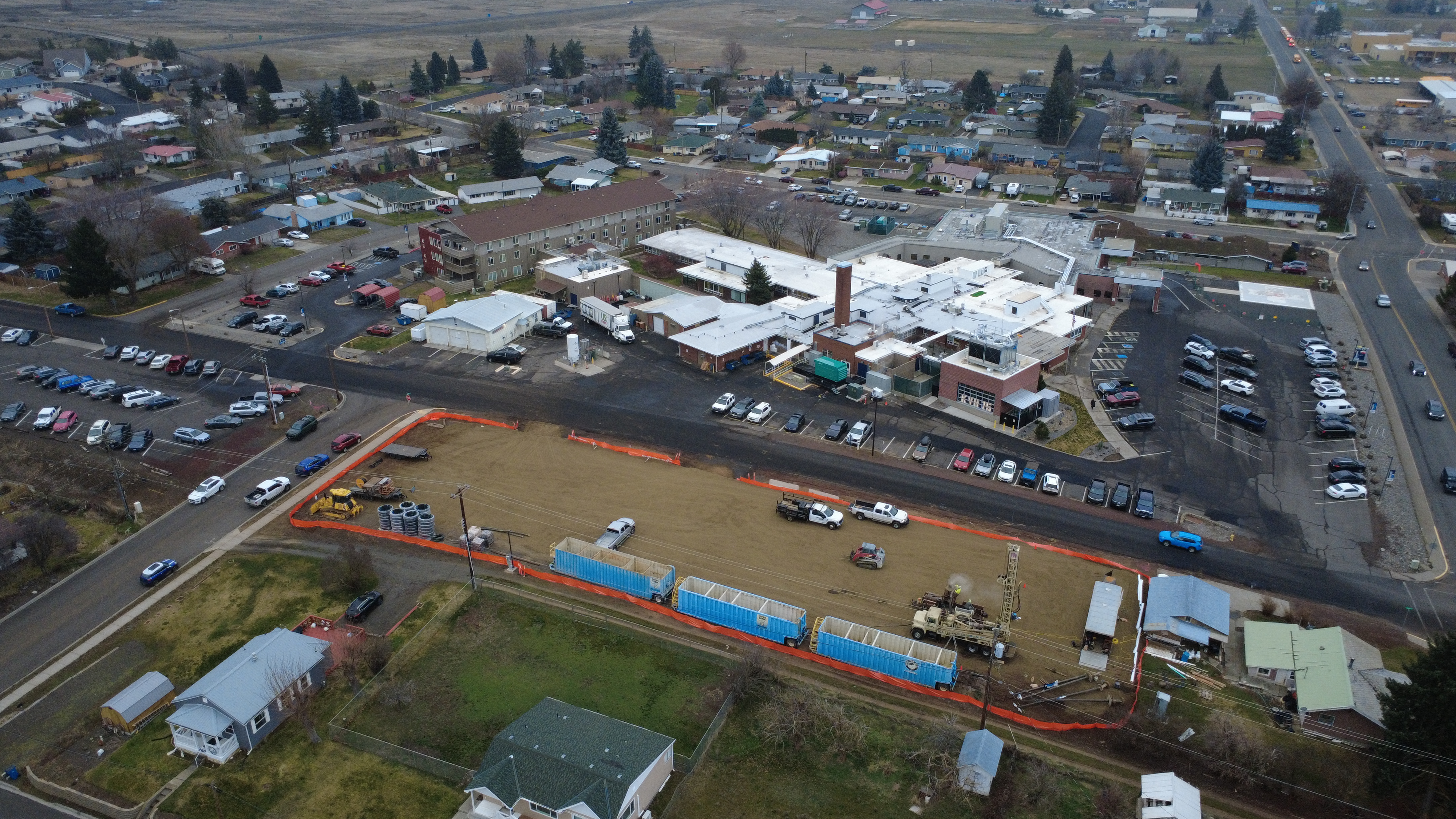
Hospital begins construction on a geothermal heating and cooling system to replace aging infrastructure and secure long-term energy stability.
Construction crews broke ground last week at Klickitat Valley Health, as part of a major capital project designed to overhaul the hospital’s aging heating and cooling
infrastructure.
The project, centered around a state-of-the-art Ground Source Heat Pump (GSHP) system, represents a significant investment in the rural hospital’s long-term operational resilience and financial stability.
Arrow Drilling is scheduled to begin the primary phase of construction next week, drilling 44 vertical boreholes, each about 400 feet deep, to access the stable underground temperatures beneath the hospital campus.
District stability through cost control
Hospital leaders pursued the project as aging natural gas boilers and conventional chillers approached the end of their useful life. Rather than replace outdated equipment with similar
systems, KVH sought a solution that would reduce long-term financial risk. “Our primary obligation is to ensure this hospital remains a stable, reliable resource for the
community,” said Jonathan Hatfield, CEO of Klickitat Valley Health. “By moving to a ground source system, we are effectively locking in our heating and cooling costs for the next
generation. We are controlling our costs so we aren’t at the mercy of volatile fuel markets. This is about district stability, ensuring our budget goes toward patient care rather than utility bills.”
Fully grant funded
KVH successfully secured 100 percent of the project funding through external sources, ensuringno impact on local taxpayers. The funding stack includes:
- Washington State Dept. of Commerce: Funding provided via the Climate Commitment Act (CCA). The CCA supports Washington’s climate action efforts by putting cap-and-invest dollars to work reducing climate pollution, creating jobs, and improving public health. Information about the CCA is available at www.climate.wa.gov.
- Federal Investment Tax Credit (ITC): KVH is leveraging the Direct Pay provision of the Inflation Reduction Act, which allows tax-exempt non-profits to receive clean energy tax credits as direct payments.
How the system works
The Columbia Plateau’s geological conditions make it well suited for ground source heating and cooling. The new system will circulate water through a closed loop of pipes buried deep
underground. Because the earth maintains a constant temperature year-round, the system can heat the hospital in winter and cool it in summer with a fraction of the energy required by
conventional systems. Once operational, the system is projected to reduce natural gas use by approximately 93 percent and lower long-term maintenance costs compared with traditional boilers.
As part of the construction project, the employee parking lot will also be paved. A future phase is planned to install solar carports over the parking area and integrate the geothermal system with the hospital’s existing microgrid and backup power infrastructure.
Advancing rural healthcare infrastructure
KVH approached this project by framing energy systems as critical patient support, essential for patient safety and comfort. By securing grants and utilizing creative capital stacking, KVH is demonstrating that small, rural hospitals can implement advanced infrastructure often reserved
for large urban centers. “This project strengthens our ability to operate reliably every day, especially during extreme
weather or utility disruptions,” said Jonathan Lewis, director of support services at Klickitat Valley Health. “Modernizing our systems directly supports patient care, staff safety and the long-term sustainability of this hospital.”
Construction is expected to continue through the coming months, with the system coming online in June.