

 CAREERS
 PAY YOUR BILL
 PATIENT PORTAL
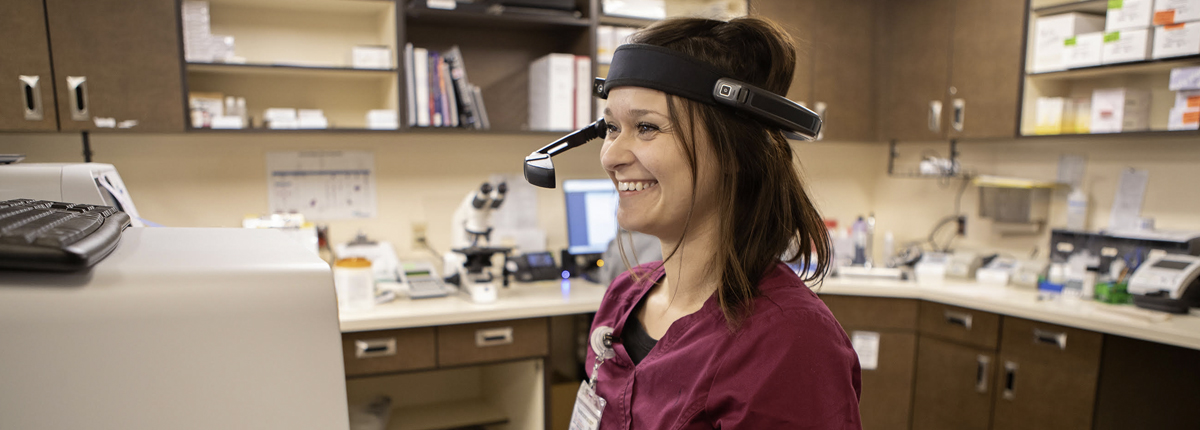
KVH Lab Tests New Virtual Reality Technology With Lab Connections LLC
Innovative training tool could help rural labs meet workforce and compliance challenges
GOLDENDALE, Wash. – Aug. 22, 2025 – Klickitat Valley Health (KVH) Laboratory is testing new virtual reality (VR) headset technology that could change how lab staff are trained and evaluated. The project is being done in partnership with Lab Connections LLC, based in Joplin, Missouri. The team includes CEO April German, MLS (ASCP); CIO Aaron Mayfield; and software developer Jay Ward, who visited KVH to see how the technology could work in a real lab setting.
This project follows new rules released in June 2025. The CLIA Interpretive Guidelines (QSO-25-10-CLIA) now state that labs do not have to conduct training and competency observations face-to-face. Instead, video and remote tools can be used as long as all other requirements are met.
“These changes make it easier for labs to keep up with today’s technology and workforce,” said Leitha Boutwell, KVH lab manager. “Using VR headsets gives us new ways to complete training and keep up with staff needs.”
The VR system will also help with remote work and management at a time when labs across the country are struggling to find and keep workers. According to the U.S. Bureau of Labor Statistics, the number of laboratory jobs is expected to grow by 5% from 2023 to 2033, with about 24,200 openings each year, mostly due to retirements and turnover. Yet, training programs only graduate about 4,900 students per year, while there are more than 9,000 job openings annually, leaving nearly half of those jobs unfilled, according to Biomedical Research & Therapy.
In addition, retirements are expected to take away about 12% of the workforce within five years, and current vacancy rates range from 7% to 11% nationwide, with some labs reporting as high as 25% unfilled positions, according to the Association for Diagnostics & Laboratory Medicine and the American Society for Clinical Pathology.
For rural labs like KVH, the shortage is even more serious. Recruiting staff is difficult because of distance from major cities, limited housing and fewer amenities. Stricter education requirements have also made it harder for people to enter the field.
“This kind of technology could really help small and rural labs,” Boutwell said. “We’ll be able to meet requirements and support our team, even when it’s tough to find new staff.”
KVH Laboratory will continue testing the VR headsets with Lab Connections LLC through the fall of 2025.